Wave Glider series

Solar-Powered Uncrewed Surface Vehicle (USV) series


The Wave Glider is an autonomous surface vessel powered by wave energy and supplemented with solar power. Equipped with satellite communications, global positioning, and autonomous navigation, it can conduct large-scale, long-distance measurements of surface oceanographic and meteorological parameters and transmit real-time data remotely.

→ Request a quote


Related UAC Products

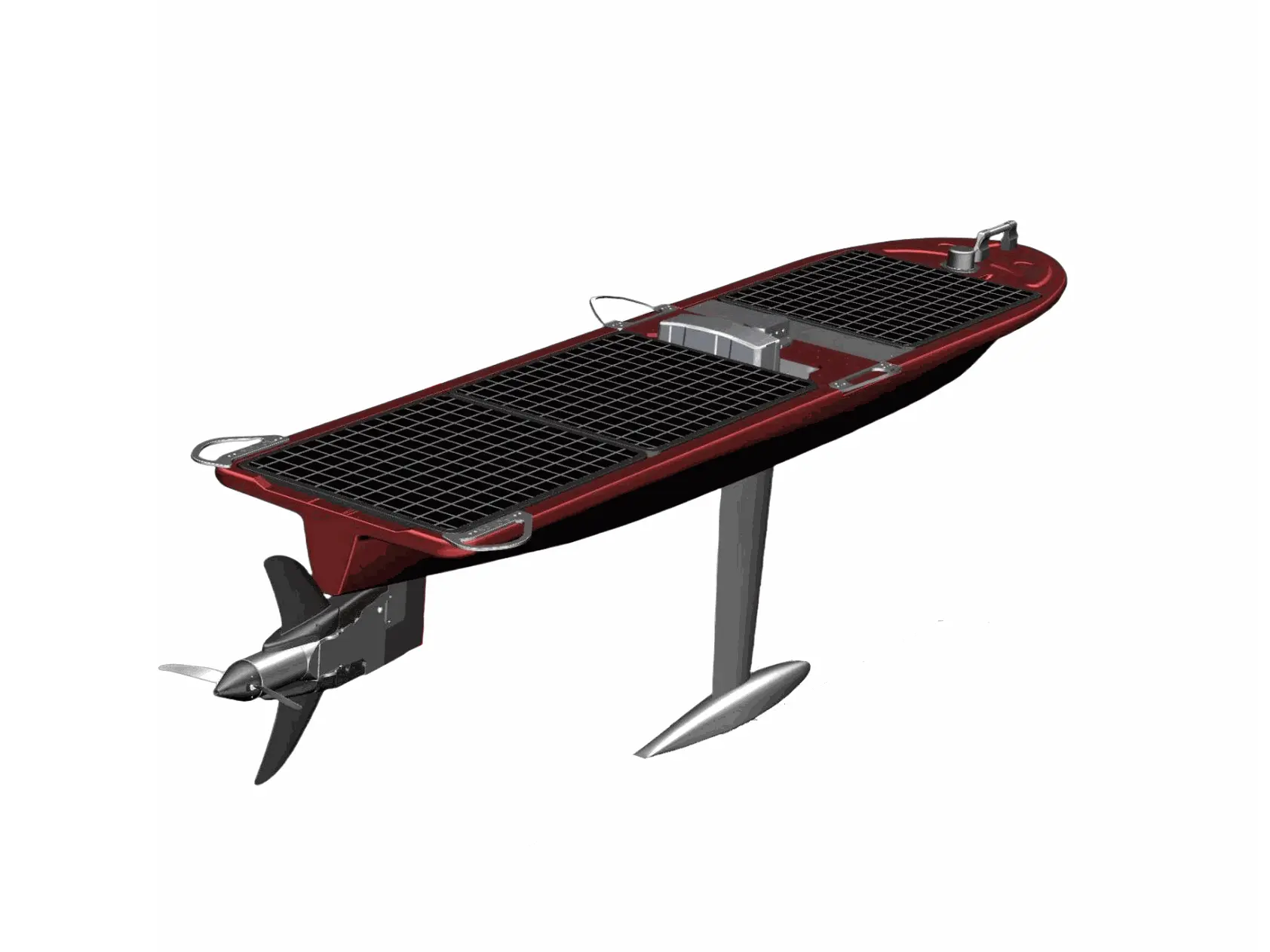
Wave Glider USV3 Solar-Powered Uncrewed Surface Vehicle (USV)

USV3 Wave Glider

Weight:  150 kg

Speed:   1.5–2.3 knots

Long-range, long-endurance
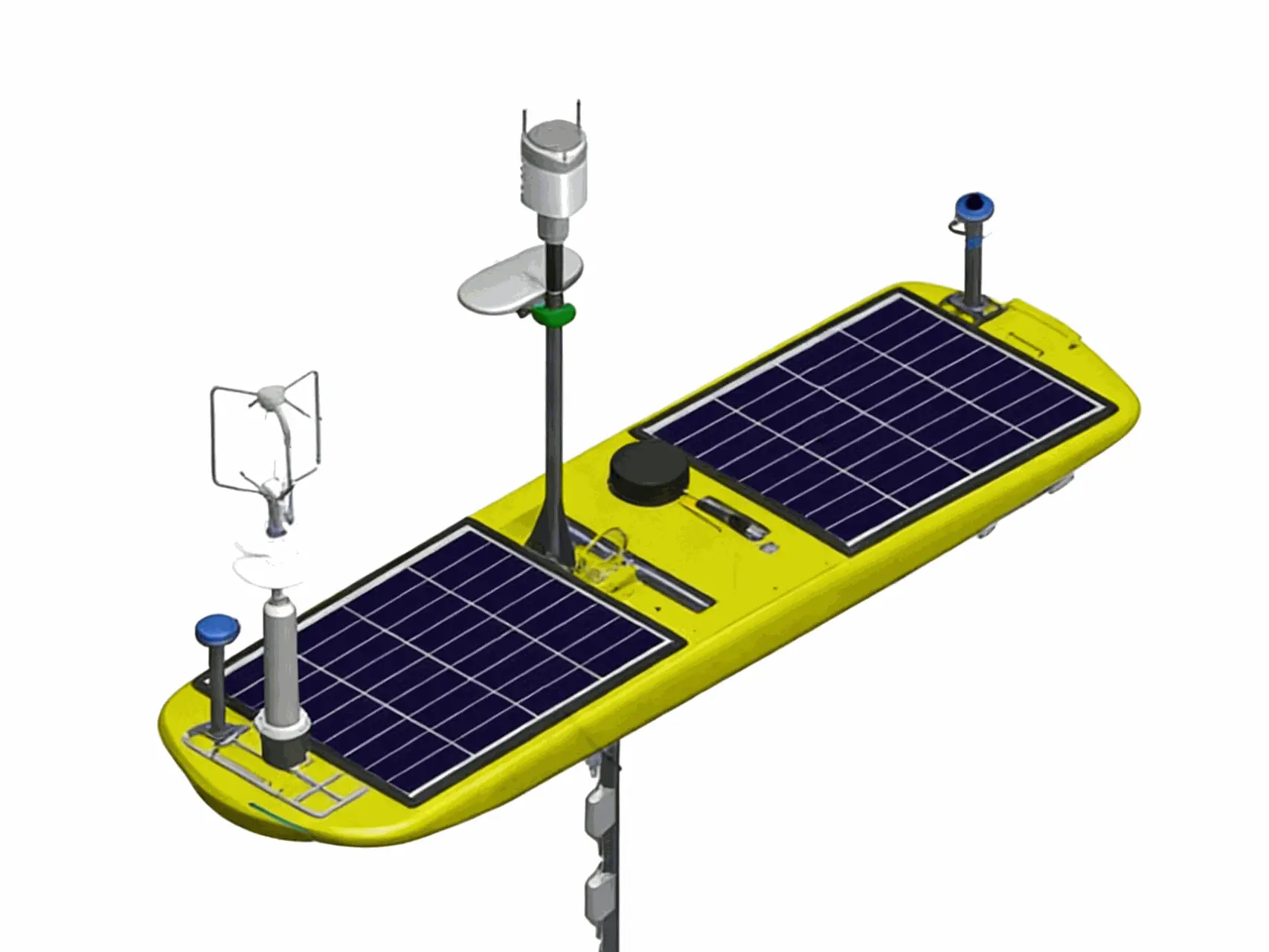

Wave Glider USV2 Solar-Powered Uncrewed Surface Vehicle (USV)

USV2 Wave Glider

Weight:  100 kg
Speed:   1.0–2.0 knots
Compact, short-to medium-range

Wave Glider Selection Comparison Table

Category Item USV3 Wave Glider USV2 Wave Glider
Electrical Specifications System Configuration Surface float, subsurface glider, armored tether (4–20 m) Surface float, subsurface glider, armored tether (7 m)
Dimensions Hull: 290 × 67 cm
Subsurface glider: 219 × 190 cm
Hydrofoil span: 143 cm
Hull: 210 × 60 cm
Subsurface glider: 190 × 110 cm
Hydrofoil span: 120 cm
Weight Approx. 150 kg Approx. 100 kg
Cruising Speed 1.5–2.3 kn (Aux, Sea State 1–4) 1.0–2.0 kn (Sea State 1–4)
Environmental Resistance Short-term submersion, max depth 2 m
Visibility Mast with flag and strobe light
Transportation Aviation transport case; deployment & recovery trolley
Safety Emergency Positioning Redundant Iridium / BeiDou beacon
Compartment Health Monitoring Pressure, temperature & water ingress monitoring
Battery Protection Independent battery packs; thermal protection Thermal protection
Navigation Heading Electronic compass
Positioning GPS + BeiDou GPS (BeiDou optional)
Path Tracking Accuracy 40 m (CEP90) 40 m (CEP80)
Station-Keeping Accuracy 40 m radius (CEP80) 140 m radius (CEP50)
Communications Line-of-Sight ZigBee + Bluetooth ZigBee
Beyond Line-of-Sight Iridium / BeiDou / Tiantong (optional) Iridium / BeiDou (optional)
Payload Capability Architecture Standardized modular payload architecture
Standard Payload AIS receiver, warning light & flag
Interfaces RS232 / RS422 / RS485, GPS, PPS, Ethernet RS232 / RS422 / RS485, GPS, PPS
Power Expansion Port 14.4–16.8 V, 10 A (watertight)
Maximum Payload 45 kg 35 kg
Maximum Payload Volume 93 L 40 L
Payload Power 80 W 40 W
Control Mission Control Chart-based multi-platform mission planning
Status Monitoring Text & visual display; SMS / Email alerts; geofencing
Autonomous Navigation Line tracking, circular tracking, virtual anchoring, heading hold
Energy Propulsion Wave-powered + auxiliary Wave-powered
Battery 980 Wh (expandable to 3.92 kWh) 980 Wh rechargeable
Solar Power 180 W (peak) 120 W (peak)

Operating Principle


The Wave Glider consists of a surface float and an underwater tow vehicle connected by a 4–7 m flexible tether. The surface float moves up and down with the waves, pulling the underwater tow vehicle via the tether. The tow vehicle converts this vertical motion into forward propulsion using pendulum-style hydrofoils with fixed angular limits, thereby propelling the surface float forward.
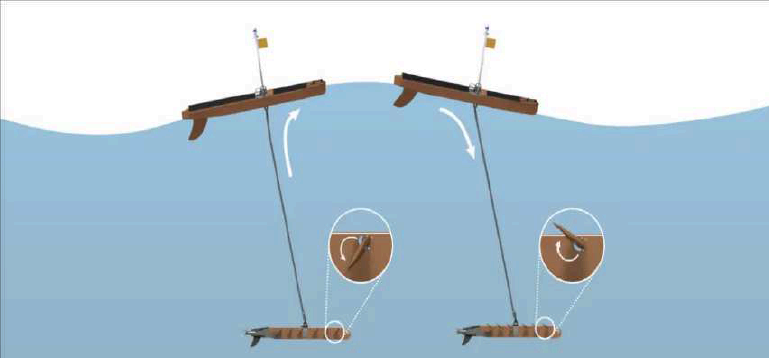
Wave Glider Operational Schematic-Product Schematic Wave Glider USV2 Solar-Powered Uncrewed Surface Vehicle (USV)  

Scientific Payloads


The Wave Glider can carry a variety of sensors, including weather stations, lidar wind profilers, atmospheric ducting sensors, wave sensors, CTDs, thermosalinographs, ADCPs, multiparameter water quality instruments, hydrophones, magnetometers, visual recognition systems, and AIS. It can perform oceanographic, meteorological, tsunami, seismic, marine life monitoring, and offshore energy surveys. Additionally, it can serve as a data relay platform using underwater acoustic modems.

Unique Features


With self-generated energy, satellite positioning, autonomous navigation, and communication capabilities, the Wave Glider can follow pre-set routes or maintain virtual anchoring at a fixed location. It can conduct long-term, large-scale autonomous missions (up to 1 year / 10,000 km) while continuously collecting and transmitting data. It can also act as a data relay between surface and underwater devices while remaining virtually anchored.  
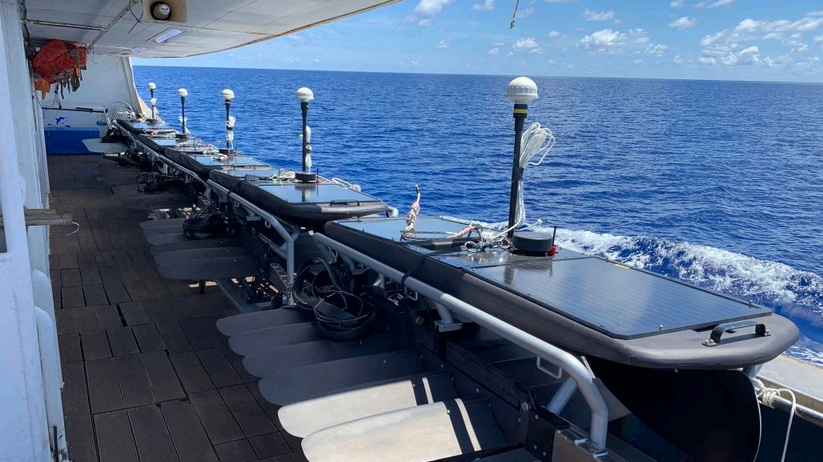
Wave Glider Mission Execution at Sea-Wave Glider USV3 Solar-Powered Uncrewed Surface Vehicle (USV)